AI Scams in the Workplace
How AI scams are reshaping workplace threats. From realistic emails to voice cloning and fake meetings, attacks now blend into everyday communication. This article explains how these scams work, why even experienced employees fall for them, and outlines practical steps like verification protocols and structured contact systems, to prevent costly mistakes.
AI scams now mimic real communication (email, voice, video), making them hard to detect
Employees fall for scams because they fit normal workflows—not due to carelessness
Verification must be systematic: always confirm sensitive requests through a second channel
Clear processes (approvals, payment rules) reduce decision risk
Structured, reliable contact data helps prevent identity-based attacks
Shift from “trust by default” to “verify by design” is essential for modern workplaces

It was a normal Tuesday morning, nothing unusual, nothing urgent. Sarah, a finance manager at a mid-sized company, had just settled in with her first coffee of the day. Her inbox was filling up, Slack notifications were coming in, and like most mornings, she was already thinking about deadlines. Then her phone rang.
The caller ID showed her CEO’s name.
She picked up.
“Hey Sarah, I need a quick favor,” the voice said. Calm. Familiar. Slightly rushed.
“We’re closing a deal, and I need you to process a payment immediately. I’ll send you the details.”
There was no hesitation in her voice when she replied, “Of course.”
Everything felt normal:
The tone matched
The urgency made sense
The situation sounded real
Ten minutes later, the transfer was complete. An hour later, the real CEO walked into the office. He had never made that call.
What just happened? The new reality of AI scams
AI has changed the rules
What happened to Sarah wasn’t a simple mistake, it was a new type of attack.
For years, employees were trained to spot scams by looking for obvious signs:
Poor grammar
Strange email addresses
Suspicious links
But those signals are disappearing.
AI now allows attackers to create messages and interactions that feel completely authentic. Instead of trying to trick people with badly written emails, scammers can now blend into normal business communication.
They can:
Reproduce a person’s tone and writing style
Generate clean, professional messages instantly
Simulate real conversations that feel natural
The result is a shift from “obvious scam” to indistinguishable from reality.
The different faces of AI scams in offices
AI scams are not one single method. They appear in different forms, depending on the situation and the target.
Emails that sound like your colleagues
Imagine you receive an email from your manager during a busy day:
“Can you quickly send me the updated client list? I need it for a meeting in 10 minutes.”
There’s nothing unusual about this request. It fits perfectly into a normal workday.
What makes it dangerous is that AI can now:
Match your company’s internal tone
Use correct terminology
Reference real projects or clients
These emails no longer feel like external threats, they feel like internal communication. And that’s exactly why they work.
Calls that sound like your boss
Voice used to be one of the strongest signals of trust. If you heard your boss’s voice, you didn’t question it. That assumption no longer holds.
With AI voice cloning, attackers can:
Capture a voice from short recordings
Recreate speech patterns and tone
Deliver messages that sound fully authentic
In high-pressure environments like finance or operations, where quick decisions are expected, this becomes extremely dangerous. A request that sounds real is often treated as real.
Meetings that look real
Video calls were once considered even more reliable than voice. Seeing someone’s face added another layer of trust. But AI has now reached a point where even this can be manipulated.
In some reported cases, employees have joined calls where:
Faces appear real
Lip movements match speech
Conversations flow naturally
Yet the entire interaction is generated. This creates a situation where employees are no longer verifying identity, they are reacting to a simulation.
The invisible scam: business email compromise
Not all scams are loud or urgent. Some are quiet and patient.
In Business Email Compromise (BEC), attackers:
Monitor communication over time
Learn how teams interact
Wait for the right moment
They don’t interrupt, they blend in.
For example:
A supplier you’ve worked with for months sends a message:
“We’ve updated our bank details. Please use this account for the next payment.”
Everything looks correct:
The email thread is familiar
The language is consistent
The timing makes sense
But the account has been changed. And once the payment is sent, recovery is often impossible.
Why smart employees still fall for it?
It’s not about intelligence, it’s about context
It’s easy to assume that scams only work because of carelessness. In reality, they work because they fit into normal behavior.
Employees are trained to:
Be responsive
Act quickly
Trust internal communication
AI exploits exactly those habits. It removes friction and replaces it with familiarity.
When something:
Looks right
Sounds right
Fits the situation
The brain doesn’t question it, it accepts it. That’s why even experienced professionals, like Sarah, can fall for these attacks.
How to prevent this from happening in your company
The solution is not to slow down your team. It is to build systems and habits that support safe decisions.
Always verify through another channel
Verification must become automatic, not optional.
Any request involving:
Money
Sensitive information
Access or permissions
Should never rely on a single source.
For example:
A phone request should be confirmed via email or internal chat
An email request should be confirmed through a direct call
This simple step creates a barrier that most scams cannot pass.
Train teams for the new type of threat
Many companies still train employees using outdated examples. But AI scams don’t follow old patterns. Teams need to understand that:
Perfect grammar does not mean safe
Familiar voices can be fake
Realistic scenarios can be engineered
Awareness is no longer about spotting mistakes, it's about questioning assumptions. So make sure to train your employees about current AI scams happening, so they don’t fall victim.
Create clear approval rules
Uncertainty creates risk. If employees have to decide on the spot whether something is legitimate, mistakes will happen. Instead, define clear processes:
No payment without two approvals
No change in financial details without written confirmation
No access granted without validation
When rules are clear, decisions become easier and safer.
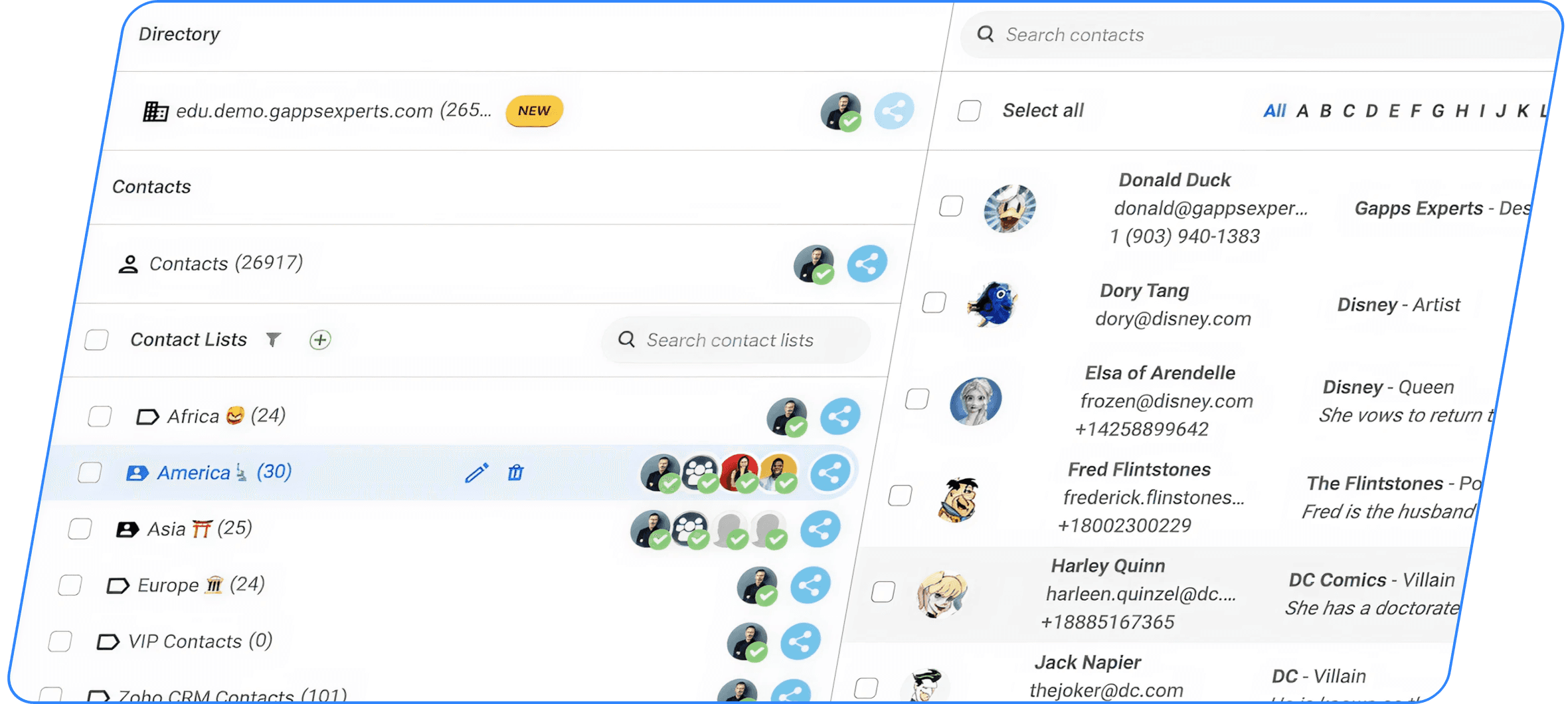
Make contact information clear and reliable
One of the biggest hidden risks in companies is poor contact visibility. Employees often deal with:
Unknown phone numbers
Incomplete contact profiles
Missing role information
When identity is unclear, people rely on context and context can be manipulated. A structured contact system changes this. When employees can instantly see:
Who the person is
Their role
Their verified contact details
They are far less likely to trust a fake identity.
5. Reduce what you share publicly
AI scams often begin long before the attack. Attackers gather information from:
Social media
Company websites
Public documents
Even small details like job roles or internal terminology can be used to build credibility. Reducing unnecessary exposure limits what attackers can use.
6. Watch for unusual behavior
Even the most advanced AI cannot perfectly replicate human behavior over time. There are always small inconsistencies. Encourage teams to notice:
Requests that feel out of pattern
Sudden urgency without explanation
Changes in normal processes
These signals are often the only remaining warning signs.
The shift every company Needs to Make
From “Trust by Default” to “Verify by Design”
For years, workplaces operated on trust. And that trust is still important but it must evolve. Today, trust should not come from:
A name
A voice
A message
It should come from verification. This doesn’t create friction, it creates confidence. Employees can act quickly, knowing that the system supports safe decisions.
Conclusion: The Next Scam Won’t Look Like a Scam
What happened to Sarah could happen in any company. Not because people are careless but because the environment has changed. AI scams don’t break security systems. They blend into everyday work and rely on people doing exactly what they are supposed to do. That’s what makes them dangerous. And that’s why prevention is not about adding more tools, it’s about:
Building better habits
Structuring information clearly
And making verification part of every critical action
Because in today’s workplace, the most dangerous message is the one that looks completely normal.
Leave a comment :
No comments yet. Be the first!